


Does Kevin Murphy Leave-In Repair Help Frizzy Summer Hair?
Summer can make hair more difficult to manage, particularly when heat, humidity, sun exposure and frequent washing become part of the daily routine. For people with dry, damaged or naturally frizz-prone hair, these conditions may lead to rough texture, flyaways and reduced manageability.
This is where leave-in hair treatments can become useful. They are designed to remain on the hair after washing, providing ongoing conditioning without requiring another rinse. Does Kevin Murphy Leave In Repair Help Frizzy Summer Hair? The answer depends on the condition of the hair, its moisture needs and the way the product is incorporated into a broader summer haircare routine.
Kevin Murphy Leave In Repair is positioned as a leave-in treatment for hair that needs additional conditioning and support. Used appropriately, a product of this type can help improve softness, manageability and the appearance of frizz, particularly when summer conditions leave hair feeling dry or difficult to control.
Why Does Hair Become Frizzy During Summer?
Humidity is one of the main reasons hair becomes frizzy during warmer months. Hair that is dry or porous can absorb moisture from humid air. This can cause the hair shaft to swell and disrupt the smooth alignment of the outer cuticle.
As a result, hair may appear uneven, fluffy or difficult to style.
Summer can also expose hair to several additional factors that contribute to dryness.
Heat and Sun Exposure
Regular exposure to strong sunlight and high temperatures can leave hair feeling drier over time. While hair does not experience sun damage in exactly the same way as skin, prolonged environmental exposure can affect its appearance, colour and texture.
Hair that is already chemically treated, coloured or heat-styled may be more susceptible to dryness.
Frequent Washing
People often wash their hair more frequently during summer because of sweat, pollution and increased outdoor activity. Excessive cleansing, particularly with products that are too strong for the hair type, can remove natural oils that help keep the hair smooth.
When the hair becomes too dry, frizz and flyaways may become more noticeable.
Swimming and Outdoor Activities
Chlorinated pool water, saltwater, and repeated sun exposure may also leave hair feeling rough. Without appropriate conditioning, the hair can gradually become more difficult to detangle and style.
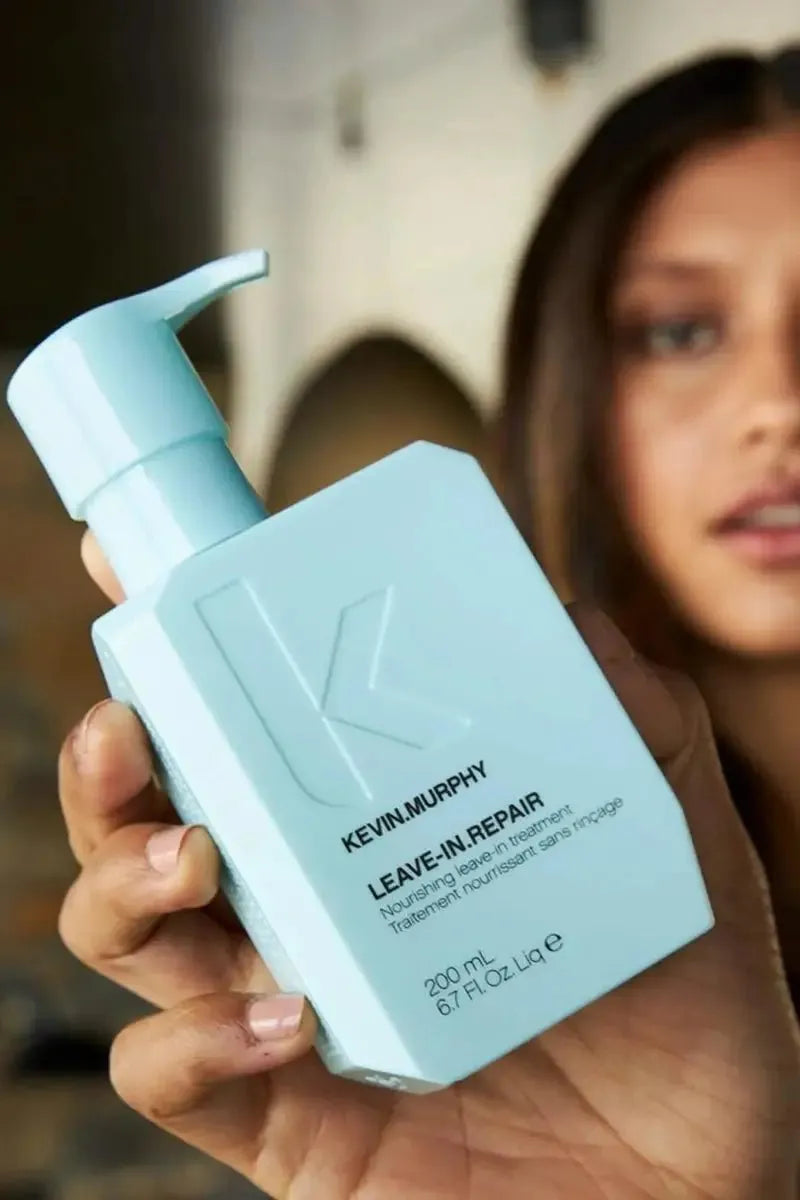
How Can Kevin Murphy Leave-In Repair Support Frizzy Hair?
A leave-in repair treatment is intended to provide conditioning after shampooing and regular rinsing. Instead of being washed away immediately, it stays on the hair and continues providing softness and manageability between washes.
For summer hair, this can be particularly useful when dryness and humidity occur at the same time.
Helps Improve Hair Manageability
Frizz is often more noticeable when individual strands feel rough and do not sit smoothly together. Applying a leave-in treatment can help soften the hair and make it easier to comb, brush or style.
Improved manageability can also reduce the need for repeated brushing, which may otherwise contribute to breakage or additional frizz.
Supports Smoother-Looking Hair
Leave-in conditioning products can coat and condition the surface of the hair, helping it appear smoother. This does not permanently change the structure of frizzy hair, but it may make flyaways and roughness less visible.
For people dealing with humid summer weather, this additional conditioning step can make hairstyles easier to maintain.
Adds Conditioning Without Rinsing
One advantage of a leave-in treatment is convenience. After washing and towel-drying the hair, the product can generally be applied before styling.
Because it remains on the hair, it can provide additional conditioning during the day compared with relying only on a rinse-out conditioner.
Is Kevin Murphy Leave-In Repair Suitable for Dry or Damaged Hair?
Hair that has been frequently coloured, chemically treated or exposed to heat styling often requires more conditioning than untreated hair. When the outer layers of the hair become rough, strands can tangle more easily and appear less smooth.
A leave-in repair product may be useful as part of a routine intended to improve the appearance and feel of damaged hair.
However, the amount used matters. Applying too much leave-in product can make fine hair feel heavy, while too little may not provide enough conditioning for thick or very dry hair.
The most suitable quantity therefore depends on hair length, thickness, texture and overall condition.
How to Use Leave-In Repair During Summer
For most people, leave-in treatments work best when applied to clean, damp hair.
After shampooing and conditioning, gently remove excess water with a towel rather than aggressively rubbing the hair. Friction from vigorous towel drying may increase tangling and frizz.
Apply the leave-in treatment mainly through the mid-lengths and ends, which are usually the driest parts of the hair.
Avoid Applying Too Much Near the Roots
Unless the scalp and roots are particularly dry, concentrating the product on the lengths can help prevent the hair from appearing flat or oily.
Fine hair generally requires less product, while thick, curly or coarse hair may benefit from slightly more.
Combine It With Gentle Styling Practices
A leave-in treatment works best when other sources of dryness are also managed.
During summer, consider reducing unnecessary heat styling, using lower temperatures where possible and avoiding repeated straightening or blow-drying throughout the day.
Using a wide-tooth comb on damp hair may also help reduce pulling and breakage.
Can Leave-In Repair Completely Eliminate Summer Frizz?
No single product can guarantee completely frizz-free hair in every environment. Humidity, hair texture, porosity, styling habits and existing damage all influence how the hair behaves.
A leave-in repair treatment should therefore be viewed as one part of a broader haircare routine rather than a permanent solution.
People with naturally curly, wavy or highly porous hair may still experience some frizz even when using conditioning treatments. The aim is generally to improve softness, manageability and overall appearance rather than eliminate every flyaway.
Building a Better Summer Haircare Routine
Managing frizzy summer hair usually requires a combination of appropriate cleansing, conditioning and styling habits.
Use a shampoo suitable for your scalp and hair type rather than washing aggressively. Follow with a conditioner, particularly on the lengths and ends. A leave-in treatment can then provide an additional layer of conditioning.
Limiting excessive heat styling and protecting hair during swimming may also help maintain smoother-looking strands.
Regular trims can be useful for removing split or excessively dry ends that contribute to an uneven appearance.
Conclusion
So, Does Kevin Murphy Leave-In Repair Help Frizzy Summer Hair? It can be a useful addition to a summer haircare routine, particularly for hair that feels dry, rough, damaged or difficult to manage.
Its main role is to provide leave-in conditioning that can help improve softness, reduce the appearance of roughness and make hair easier to style. Results will vary depending on hair type, level of damage, humidity and the rest of the haircare routine.
For better results during summer, use leave-in conditioning alongside gentle washing, regular conditioning, controlled heat styling and appropriate protection from environmental stress. This balanced approach can help keep frizzy hair looking smoother and more manageable throughout warmer months.